How to Create a Strong Product Mix for Your Coworking Space

8 mins read Published: Oct 17, 2025 Last updated: Sep 3, 2026
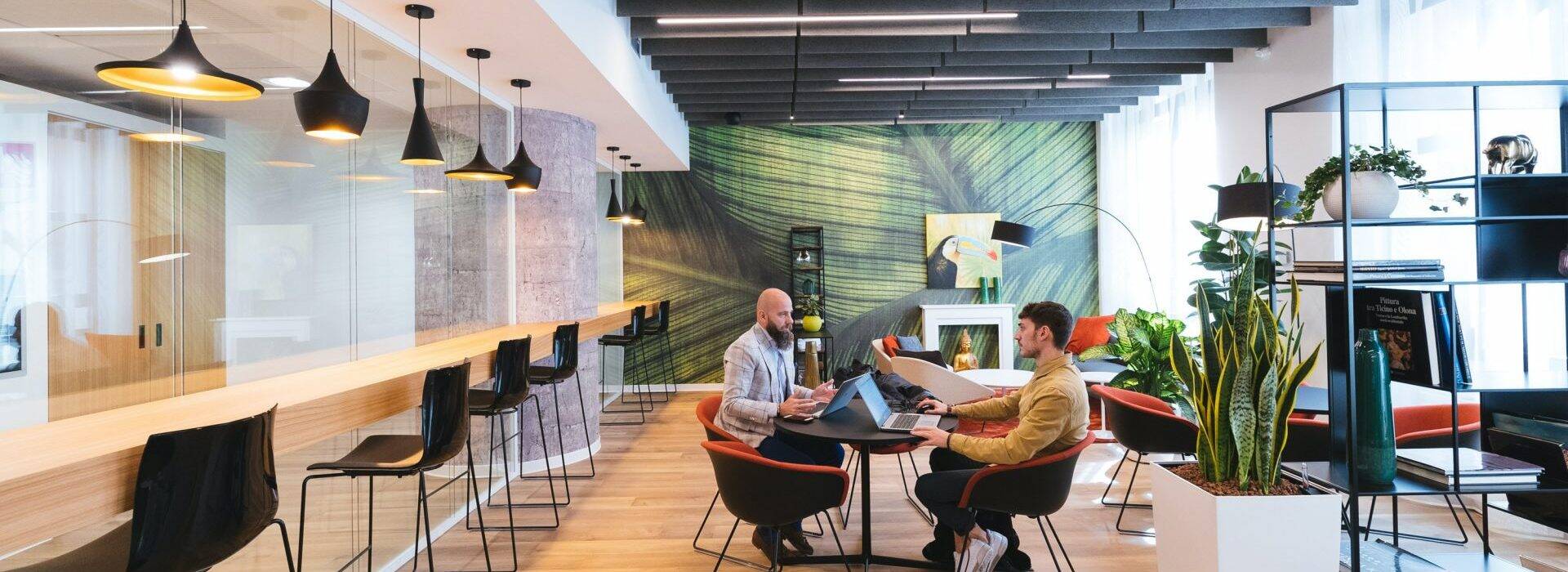
Coworking and flex space markets have matured. What used to be a single open-space membership has evolved into a dynamic ecosystem of products – from private offices and day passes to digital memberships, event hosting, and premium add-ons.
As competition grows and member expectations rise, your product mix becomes one of your most powerful levers for profitability, brand differentiation, and member satisfaction.

Whether you’re opening your first space or scaling across multiple locations, building a strong, balanced product mix is key to long-term success.
Know your audience: Define member personas (freelancers, startups, corporates, etc.) and match offerings to their needs.
Layer your products: Build a mix of shared workspaces, private offices, meeting rooms, and high-margin add-ons.
Design for flexibility: Use modular spaces, tiered memberships, and dynamic pricing to optimize usage.
Go digital: Sell passes, bookings, and memberships online for 24/7 sales and streamlined operations.
Balance smartly: Target 50–70% revenue from private offices, 20–35% from flex offerings, and 5–20% from add-ons.
Test and adapt: Pilot new offerings, analyze utilization, and refine your mix with data.
Avoid common traps: Don’t overcomplicate, misprice, or ignore tech and segmentation.
Embrace trends: Hybrid work, self-service booking, experience-focused design, and automation are shaping the future.
Before deciding how to allocate your space or price your memberships, define your target audiences. Your mix should reflect who you serve and why they choose you over alternatives.
Here are a few common personas and what they value:
| Persona | Key Needs | Ideal Offerings |
|---|---|---|
| Freelancers / Creators | Affordability, social energy, flexibility | Hot desks, day passes, community events, phone booths |
| Startups / Small Teams | Scalability, 24/7 access, collaboration | Dedicated desks, small offices, meeting rooms |
| Remote Employees / Corporate Members | Privacy, brand alignment, hybrid team setup | Private offices, meeting credits, enterprise plans |
| Consultants / Professionals | Client-facing spaces, credibility, calm | Meeting rooms, virtual offices, concierge services |
| Community Builders / Event Hosts | Large gatherings, AV equipment | Event halls, workshops, hybrid-ready setups |
Your location, brand identity, and market density also influence the mix.
Tip: Revisit your personas every 6–12 months. Member profiles evolve faster than floor plans.
Think of your product mix as a pyramid: a solid base of recurring revenue, supported by layers of flexible, high-margin, and experiential offerings.
Your open workspace fuels energy, community, and accessibility – but it must balance density, comfort, and profitability.

Key strategies:
Metrics to watch: Desk utilization, revenue per available desk, revenue per occupied desk, churn rate.
Example: A 50-desk open area with 75% utilization can generate stable monthly cash flow — but introducing part-time or credit-based passes can push utilization closer to 90% without adding more space.
Private offices remain the anchor of financial stability for most coworking spaces. They offer predictable revenue and appeal to remote teams, startups, and SMEs seeking flexible leases.

Best practices:
Pro tip: Track your occupancy rate alongside pipeline length for new space inquiries. An efficient product mix ensures minimal idle time between tenants.
Your meeting rooms and event areas are both revenue generators and lead magnets.
Monetization ideas:
Tip: Promote meeting credits as part of membership upgrades – it boosts perceived value and engagement.
Example: Operators using online booking integrated into their site often see higher utilization of meeting rooms compared to those relying on manual bookings.
Read this blog if you want to dive deeper into some really valuable coworking stats for 2026 and learn more about the topic.
Your amenities transform a space into an experience – and experience drives loyalty.
Three layers of value-added services:
Innovative ideas:
Each amenity can become a small but steady profit center.
In 2025 and beyond, your “product mix” doesn’t stop at your front door.
Forward-thinking operators monetize digital channels and online sales just like physical space.
Examples:
If you’re using OfficeRnD Growth Hub, you can integrate this directly into your website, enabling real-time booking, checkout, and payments.
Your website becomes a 24/7 sales engine, no staff intervention needed. Check out the case study with UK-based coworking space “x+why”
A balanced coworking product mix typically aligns around three strategic ratios. These aren’t strict rules but helpful benchmarks:
| Ratio | New / Growing Operators | Mature / Multi-location Operators |
|---|---|---|
| Revenue base (private offices) | 60–70% | 50–60% |
| Flexible offerings (hot desks, meeting rooms) | 20–30% | 25–35% |
| Add-ons & services | 5–10% | 10–20% |
As your operation scales, recurring office revenue becomes your foundation – but differentiation comes from high-margin, experience-driven add-ons.
A strong product mix isn’t set once; it evolves. The most successful operators constantly test, measure, and refine.
Practical ways to experiment:
Tool tip: With the OfficeRnD Data Hub, you can visualize utilization, revenue mix, and booking patterns across all products and locations, helping you optimize your offering with data, not guesswork.
Even experienced operators fall into traps when diversifying their mix.
Here’s how to steer clear:
| Pitfall | Consequence | Solution |
|---|---|---|
| Trying too many new offerings at once | Operational complexity, brand dilution | Add one new line at a time; pilot before rollout |
| Misaligned pricing | Low margins, cannibalization | Model contribution margin per product |
| Ignoring member segmentation | Low retention | Match product tiers to customer personas |
| Underinvesting in technology | Manual friction, low conversion | Adopt a unified platform for bookings, billing, and CRM |
| Neglecting underused space | Lost revenue | Use data to reconfigure or repurpose idle zones |
Looking ahead, several trends are reshaping how operators design and monetize their spaces:
The most future-ready operators will pair physical flexibility with digital scalability – running operations, bookings, and growth all in one connected ecosystem.
If you’re reviewing your product mix today, here’s a simple roadmap:
A strong product mix isn’t just about filling space; it’s about building systems that sell themselves.
Managing multiple products, memberships, and locations manually can quickly become overwhelming.
That’s where a coworking management platform like OfficeRnD Flex helps – centralizing your entire operation:
And with OfficeRnD Growth Hub, you can extend your reach beyond your front desk:
Together, they help you build a product mix that scales — seamlessly connecting space, people, and revenue.
Your product mix is the heart of your coworking business model. It defines how you serve your members, what your brand stands for, and how profitably you grow.
Start simple. Measure relentlessly. Keep evolving.
With the right balance of offerings and the right technology behind them, your coworking space can thrive in any market cycle.


![14 Best Space Management Software Tested and Compared [2026]](data:image/svg+xml;base64,PHN2ZyB2aWV3Qm94PSIwIDAgMTE1MiA3MTkiIHdpZHRoPSIxMTUyIiBoZWlnaHQ9IjcxOSIgeG1sbnM9Imh0dHA6Ly93d3cudzMub3JnLzIwMDAvc3ZnIj48L3N2Zz4=)
The best space management software in 2026 is OfficeRnD Workplace. This is a complete buyer's guide.

The average flex operator connects 1.65 of 5 core systems. See what the gap costs and how to fix it.
A 2-site coworking operator shares how OfficeRnD's AI Sales Agent handles inquiries.
A full year of hybrid work data, taken from our own Workplace product analytics.
OfficeRnD Flex vs Nexudus on pricing, features, and real G2 reviews.
OfficeRnD Workplace vs Robin, full comparison: pricing, adoption, coordination and fit