Introducing AI Sales Agent for Web Chat: Real-Time Answers for Prospects and Members

5 mins read Published: Jul 16, 2026 Last updated: Jul 16, 2026
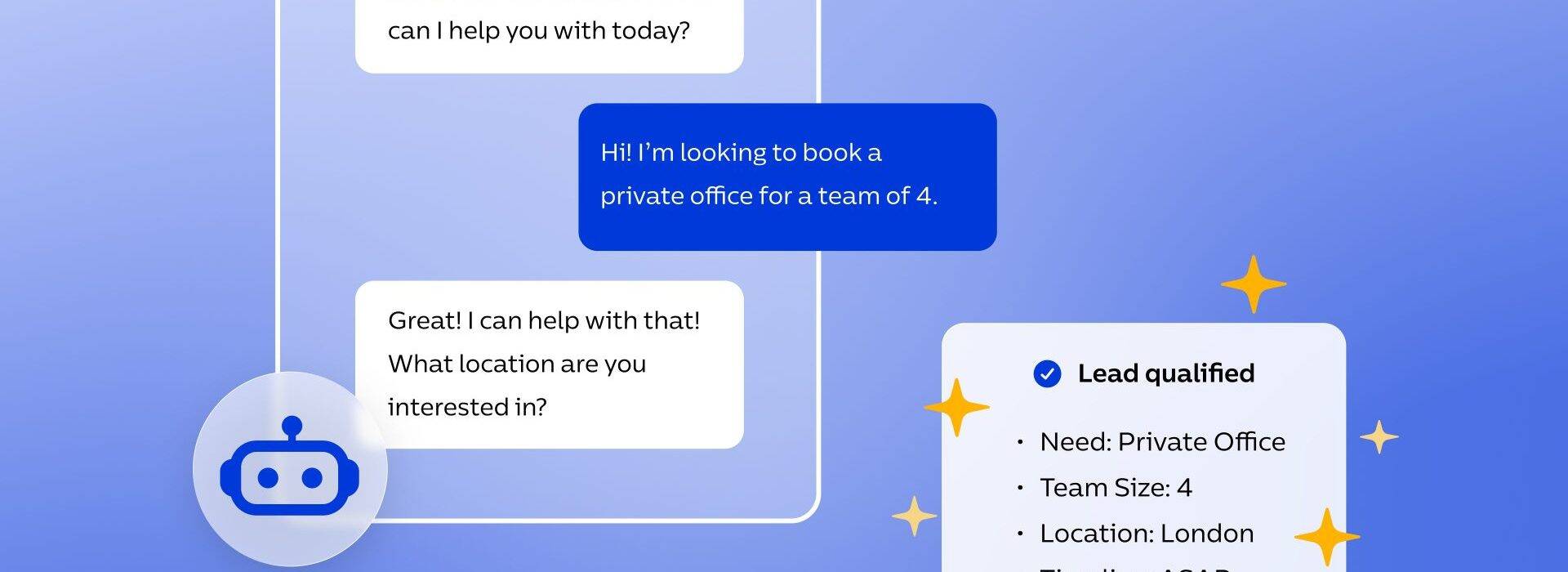
The OfficeRnD AI Sales Agent now works in your website chat. It qualifies prospects and answers existing members in real time, on the same page they’re already on.
Someone lands on your pricing page at 11pm. They have 2 questions and a competitor tab already open. If they get answers, they book a tour. If they get a contact form and a “we’ll be in touch,” they close the tab.

Now picture a current member on Saturday morning asking for the WiFi password or how to print on a Mac. Your team is closed. The question sits until Monday. It’s a small thing. It’s also the kind of small thing that quietly wears down how someone feels about the space they pay for.
Both moments happen on your website. Until now, both waited for a human.
The OfficeRnD AI Sales Agent has moved beyond email. It now works directly in your website chat, and it handles both sides of the front desk.
For a prospect, it answers questions about pricing, availability, and amenities, captures their details, reads their intent, and points them toward a tour or a booking.
For an existing member, it recognizes who they are and answers the question then and there. An invoice query at 9pm gets a 9pm answer.
The website is where interest is highest, and patience is shortest. People decide fast, and they decide based on who answers first.
The data on response speed is blunt. In a 2025–2026 benchmark of 939 companies, only about a quarter of businesses replied to an inbound lead within 5 minutes, and 42% took longer than a full day. The companies that answered within 5 minutes closed at more than double the rate of the ones that waited until the next day. Speed decides most of it.
We went deep on this in Lead decay in coworking: the gap between when a prospect hits submit and when your team can reply, and what that gap costs you each month. A chat widget closes that gap at the exact spot where it opens, on the page they’re already reading.
Operators are already treating the website as a place where deals start, not a brochure that sits there. In a recent webinar on turning your website into a revenue channel, the operators who saw the biggest gains were the ones whose sites did more of the selling.
4 & Co converted 60% of inbound leads into tour bookings, up from a sub-50% rate when responses were handled manually, once no inquiry could slip through unanswered. Live chat extends that same idea: a page that can answer back.
OfficeRnD’s own AI Hub data points the same way for coworking specifically. The agent handles roughly 60% of inbound inquiries end to end without a human touch, and lifts lead-to-tour conversion by up to 20%. Treat those as directional. Your result depends on where you’re starting from.
The support side is easy to underrate, and it matters just as much.
Member expectations have moved. Zendesk’s CX Trends research finds that 74% of consumers now expect service to be available around the clock, and most expect faster answers than they did a year ago. Your members carry those expectations through your door.
Most member questions are routine and have a clear answer: invoices, bookings, access, account details. The agent recognizes the member, pulls the context, and resolves it on the spot. It gets handled without a ticket or a wait, and without landing in Monday’s backlog.
Your team’s attention stays on the work that actually needs a person: tours, renewals, and the member who’s quietly thinking about leaving.
The prospect who arrives at midnight gets a real reply. The member with a small problem gets it solved before it sours. Your team stops spending its sharpest hours on repetitive first responses and qualification, and spends them on the work that closes deals and keeps members.

Because it’s the same agent across email and web chat, the experience holds together. A prospect who starts in chat and later emails doesn’t have to start over. A member gets the same recognition wherever they reach out.
Web chat is the newest piece of AI Hub, the AI layer inside OfficeRnD Flex. The AI Sales Agent was the first agent in it. This release widens where that agent works, from your inbox to the page a prospect or member is looking at right now.
More agents are on the way, built for the repetitive, time-sensitive work that keeps landing on your team.


![14 Best Space Management Software Tested and Compared [2026]](data:image/svg+xml;base64,PHN2ZyB2aWV3Qm94PSIwIDAgMTE1MiA3MTkiIHdpZHRoPSIxMTUyIiBoZWlnaHQ9IjcxOSIgeG1sbnM9Imh0dHA6Ly93d3cudzMub3JnLzIwMDAvc3ZnIj48L3N2Zz4=)
The best space management software in 2026 is OfficeRnD Workplace. This is a complete buyer's guide.

The average flex operator connects 1.65 of 5 core systems. See what the gap costs and how to fix it.
A 2-site coworking operator shares how OfficeRnD's AI Sales Agent handles inquiries.
A full year of hybrid work data, taken from our own Workplace product analytics.
OfficeRnD Flex vs Nexudus on pricing, features, and real G2 reviews.
OfficeRnD Workplace vs Robin, full comparison: pricing, adoption, coordination and fit