How to Choose University Scheduling Software: A Practical Guide for Higher Education Teams

11 mins read Published: May 12, 2026 Last updated: May 13, 2026
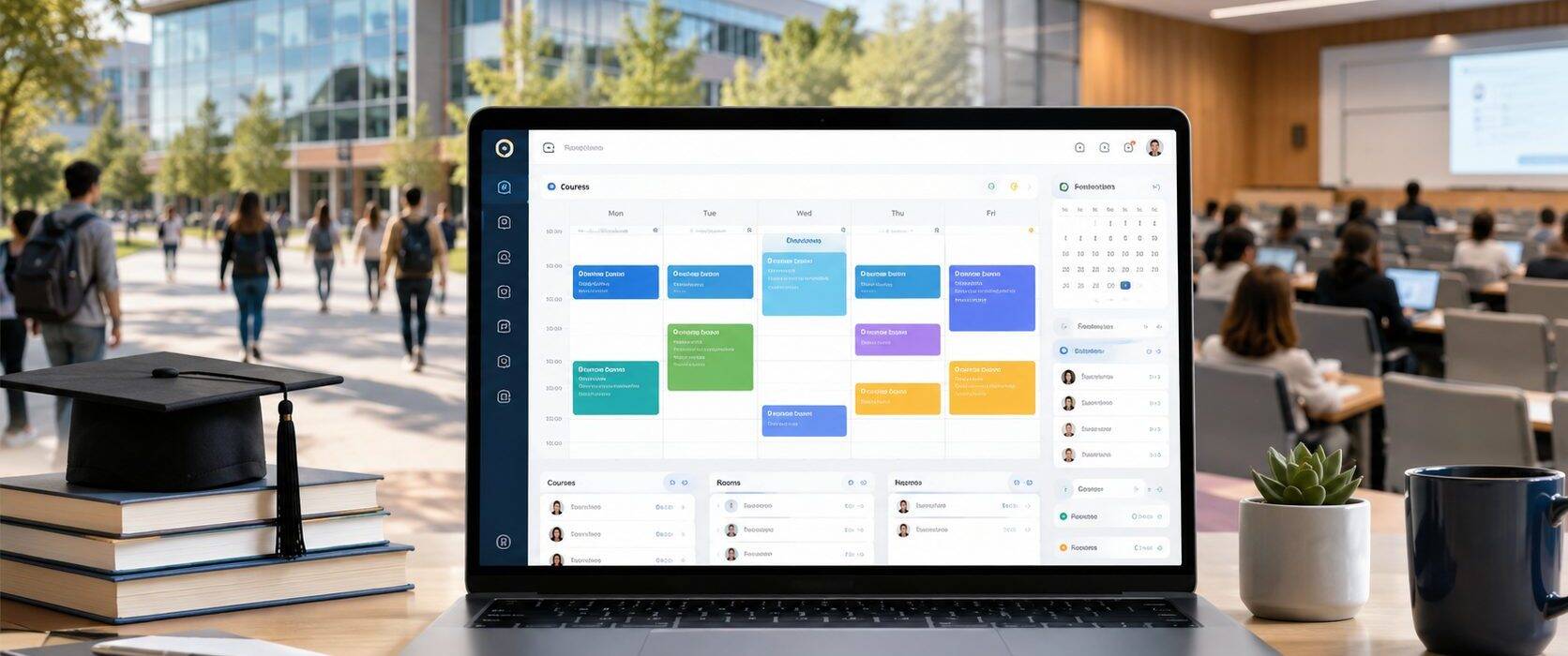
Choosing university scheduling software gets complicated fast because universities schedule more than classes.
A campus may need to manage faculty offices, shared desks, meeting rooms, study rooms, labs, guest lecturers, visiting researchers, contractors, department-owned spaces, and hybrid staff schedules. Each group has different needs. Each space has different rules.

The buying process should start with a simple question: Which scheduling problem are you trying to solve?
University scheduling software can mean academic timetabling, room booking, event scheduling or campus workplace scheduling. This guide focuses on software for managing physical campus spaces, shared resources, visitors, and hybrid faculty or staff schedules.
That scope matters. Higher education teams are under pressure to make better use of existing space. Gordian’s 2025 State of Facilities in Higher Education report says conversations about space utilization continue across campuses and notes that hybrid or remote office practices are still affecting office occupancy patterns.
The best choice depends on who needs to book space, which spaces need rules or approvals and what data facilities, IT, HR and campus leadership need after rollout.
At the same time, budgets are tight. NACUBO’s 2025 State of Higher Education research lists unreliable funding, workforce pressure and rising operating costs among the top business issues facing higher education business officers.
Scheduling software will not fix those issues by itself. It can give facilities, IT, HR and campus operations teams better control over how spaces are booked, used, and reported.
University scheduling software lets higher education teams manage bookings, availability, access rules, and usage across campus spaces or resources.

Depending on the system, it may cover:
The phrase has mixed search intent. Some people use it to mean course timetabling. Others use it to mean room scheduling, desk booking or space management.
That difference matters when you compare vendors.
Academic timetabling software is used for course schedules, exams, instructors and classroom assignments.
It is usually owned by registrar teams, academic operations or scheduling offices.
Room booking software is used for meeting rooms, seminar rooms, conference rooms, study rooms and department-owned spaces.
It is usually used by facilities teams, faculty, staff, students, and administrative departments.
Event scheduling software is used for guest lectures, student events, ceremonies, conferences and large room requests. It often includes request forms, approvals, event services, and coordination across multiple teams.
Workplace scheduling software is used for desk booking, hybrid staff schedules, shared workspaces, room reservations, visitor management and campus space usage.
It is usually relevant for facilities, HR, IT, workplace teams, and administrative departments.
A university may need more than one scheduling system. Academic timetabling, event scheduling and workplace scheduling often overlap in conversation, but they solve different problems.
Before comparing vendors, define the job the software needs to handle.
| If you need to… | Look for… |
|---|---|
| Build semester timetables | Academic timetabling software |
| Schedule exams and instructors | Academic timetabling software |
| Book meeting rooms, seminar rooms or study rooms | Room booking software |
| Manage shared desks for faculty and staff | Workplace scheduling software |
| Coordinate hybrid office days | Workplace scheduling software |
| Manage guest lecturers, contractors or visiting researchers | Visitor management software |
| Track how campus spaces are used | Workplace or space management software |
| Manage large campus events | Event scheduling software |
Many universities will need several of these capabilities. The key is to avoid choosing a system built for course scheduling when the real need is space booking, visitor check-in or hybrid staff coordination.
Before reviewing vendors, list the problems your current process creates.
Common examples include:
These problems should shape your requirements. A generic booking tool may work for a small department. A university-wide system needs more control.
Ask these questions first:
University scheduling gets messy when teams only document the obvious rooms.
A better requirements list includes every space and resource people need to reserve.
Include:
For each room, the software should show availability, capacity, location, equipment, booking rules and approval requirements.
Desk booking matters when faculty, staff and visiting researchers split time across campus, home and other university locations.
Common use cases include:
The system should make it easy to find a suitable desk, see where colleagues plan to work and book near a department or team when needed.
Labs and specialist rooms often need stricter rules than normal meeting rooms.
Check whether the software can support:
This is especially relevant for research pods, recording rooms, specialist teaching spaces and equipment rooms.
Universities often need to book a space and a resource together.
Examples include:
Check whether resources can be tied to specific rooms, buildings or user groups.
Visitor workflows should be part of the review when bookings involve people from outside the institution.
Common visitor types include:
A room booking may need a visitor record, host notification and check-in process. If those steps happen outside the scheduling system, reception and security teams may still rely on manual work.
Permissions are one of the biggest differences between simple booking tools and university-ready scheduling software.
A space may be visible to one group, bookable by another and restricted for students during certain hours. A lab may need approval from a department owner. A shared meeting room may need rules for booking length, recurring use or access by external guests.
Look for support for:
Good vendor questions include:
The system may satisfy every admin requirement and still fail if people avoid using it. We write about adoption more extensively in our best desk booking platforms for 2026 guide.

The booking flow should let users:
Floor plans are useful across large campuses because room names are often unclear to new staff, visiting faculty or external guests. A floor plan lets people choose a space based on building, floor and location rather than guessing from a room code.
For hybrid teams, visibility also matters. Faculty and staff may need to see who plans to be on campus, book near colleagues or coordinate department days. This can support office hours, mentorship, admin meetings and team planning.
University scheduling software should fit into tools people already use.
Review support for:
Ask:
IT should review identity requirements early.
Check for support for:
Single sign-on reduces separate accounts and gives IT more control over access. It also makes offboarding easier when access follows existing identity rules.
Booking reminders and alerts can reduce confusion.
Look for:
Reporting is where scheduling software becomes useful beyond day-to-day bookings.
Facilities teams may need to understand which rooms are overbooked, which desks sit unused, which buildings see peak demand and where space rules need to change.
Useful reports may include:
Different teams will use this data differently.
Facilities teams can see which rooms, desks, and buildings are used most often. IT can review adoption, support needs, and integration issues.
HR can compare hybrid work policies with actual office patterns. Academic operations can understand how department spaces are used outside formal timetables.
Leadership can use space usage data when reviewing renovations, campus workplace plans, and real estate costs.
Ask vendors:
Many campus bookings involve external guests.
A guest lecturer may need access to a seminar room. A contractor may need to check in at reception before reaching a building. A visiting researcher may need temporary access to a desk, lab or department area.
Visitor management features to check include:
This is especially relevant when reception, security, facilities and academic departments all touch the visitor process.
A university scheduling system needs careful setup.
Typical setup includes:
Decide who owns the system before launch. Ownership may sit with a central facilities team, IT, a workplace team or a shared group across facilities, HR and IT.
A focused rollout is usually easier to manage. Start with one campus, building or department. Define the spaces and rules. Set up calendar and identity connections. Train admins first. Share simple booking instructions with users. Review adoption after 30 to 60 days before expanding.
Ask vendors:
| Evaluation area | What to check |
|---|---|
| Space types | Rooms, desks, labs, study spaces, parking and shared resources |
| User groups | Faculty, staff, students, visitors and contractors |
| Permissions | Department rules, approvals, role-based access and admin overrides |
| Booking experience | Desktop, mobile, floor plans, filters and real-time availability |
| Calendar connections | Microsoft 365, Google Workspace, Outlook and Google Calendar |
| Identity | SSO through Azure AD, Okta or Google |
| Notifications | Email, Slack, Microsoft Teams and host alerts |
| Visitor management | Pre-registration, check-in, visitor logs and host notifications |
| Reporting | Utilization, no-shows, peak demand and department usage |
| Administration | Multi-campus setup, delegated admins and booking policies |
| Support | Onboarding, training, documentation and admin support |

A registrar team, facilities team and HR team may all say “scheduling” and mean different things. Define the job first.
Basic booking tools often struggle with department rules, role-based access, approval flows, and multi-campus controls.
Separate systems can increase admin work and make reporting harder. Review whether one system can cover the main campus workplace use cases.
IT should review SSO, calendar connections, data handling, user provisioning, and security requirements.
Without usage data, teams may still rely on anecdotal feedback when making space decisions.
OfficeRnD Workplace is worth reviewing if your university needs to manage desks, rooms, shared resources, visitors and hybrid staff schedules across campus spaces.
It supports desk booking, room reservations, interactive floor plans, visitor management, Microsoft 365 and Google Workspace calendar connections, SSO and booking reminders through Slack or Microsoft Teams.
Explore OfficeRnD Workplace for you academia needs.
Before choosing a vendor, confirm that you can:
The right university scheduling software should match the way your campus works: many spaces, many teams, many rules and many people who need a clear way to find and book the right space.


![14 Best Space Management Software Tested and Compared [2026]](data:image/svg+xml;base64,PHN2ZyB2aWV3Qm94PSIwIDAgMTE1MiA3MTkiIHdpZHRoPSIxMTUyIiBoZWlnaHQ9IjcxOSIgeG1sbnM9Imh0dHA6Ly93d3cudzMub3JnLzIwMDAvc3ZnIj48L3N2Zz4=)
The best space management software in 2026 is OfficeRnD Workplace. This is a complete buyer's guide.

The average flex operator connects 1.65 of 5 core systems. See what the gap costs and how to fix it.
A 2-site coworking operator shares how OfficeRnD's AI Sales Agent handles inquiries.
A full year of hybrid work data, taken from our own Workplace product analytics.
OfficeRnD Flex vs Nexudus on pricing, features, and real G2 reviews.
OfficeRnD Workplace vs Robin, full comparison: pricing, adoption, coordination and fit