These 6 Benefits of Returning to The Office Will Inspire Your Employees

7 mins read Published: Aug 13, 2021 Last updated: Jul 31, 2026
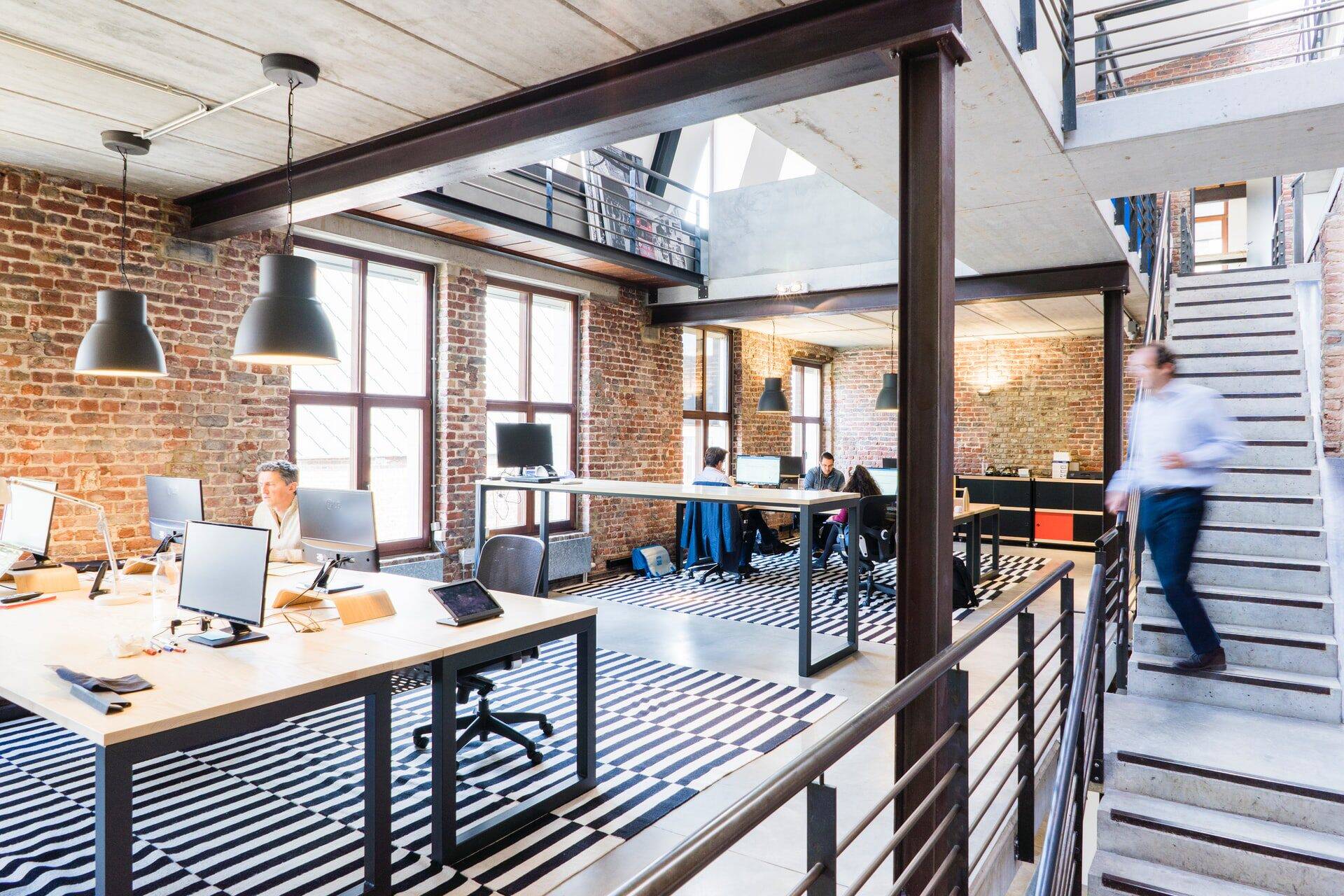
Most companies have settled the remote-versus-office debate, and the answer is hybrid. Gallup reports that 54% of remote-capable workers now split their time between home and the office, which puts the question in front of every HR and facilities team: what makes the commute worth it?
Returning to the office means bringing employees back to a shared physical workplace, usually on a hybrid schedule, to do the work that benefits from being in the same room: collaboration, mentoring, and connection.

“For all that we’ve been able to achieve while many of us have been separated, the truth is that there has been something essential missing from this past year: each other,” said Apple’s CEO Tim Cook back in 2021 while talking about Apple’s policy on welcoming employees back to the office.
Working from home has real advantages when it’s done right. The office has its own. Here are six benefits of returning to the office that can help companies and their HR teams give people a reason to come in.
Remote work can produce impressive output and quietly burn people out at the same time. Sean Bisceglia, then CEO of the consumer research company Curion, said the productivity rate of their employees climbed during remote working, with staff sending emails at 1 AM. The cost of that pace is burnout.
Working from home makes boundaries hard to hold. A predictable in-office day lets people set goals, finish them, and sign off. That structure protects the evening, and it builds the kind of trust that only forms when a team works in the same place.
A modern work culture isn’t confined to meeting rooms or desks. Someone’s best idea often arrives at the coffee machine, not in a scheduled call. Gallup calls this the office’s advantage for creativity: hallway conversations, coffee breaks, and “the meeting after the meeting” feed problem solving in ways that are hard to reproduce over video.
Would you rather walk across the room to share an idea, or schedule a video call for it?
Even people who work remotely tend to agree the office wins here. Gallup found that only 35% of fully remote workers say collaborative work is best done remotely, and that managers name communication (48%) and collaboration (44%) as the two biggest challenges their teams face in a hybrid setup.
Working with your team in the same room removes friction. You read a colleague’s body language, catch their mood, and adjust in real time. A study in Nature Human Behaviour that Gallup cites found that collaborative idea generation dropped when random pairs worked together virtually compared with pairs who worked in person.
Being in the same space isn’t automatic magic, though. Gallup’s own point is that creative time has to be intentional, whether people are in the office or not. Companies that get this right design the workplace around the moments that need people together, and leave heads-down work for wherever it’s done best.
Friendly banter with a colleague about a weekend game beats asking “hello, can you hear me now?” for the tenth time on a call.
Companies that get people excited to come in usually make the space worth showing up for. Free food is a reliable draw: 80% of employees say they feel more enthusiastic about work when the company provides lunch, according to a Fooda survey. On-site amenities, social events, and comfortable spaces give people a reason to structure their week around the office instead of dreading it.
The goal is an environment that motivates people and builds a sense of ownership over their work.
Sigal Barsade, the late professor of management at The Wharton School, put it plainly: “The exchange of emotion is a critical building block to friendship.”
Apply that to the office and the logic holds. Someone having a rough day can catch a colleague in person, and that exchange often turns into a better idea or just a lighter mood.
Annie McKee, author of How to Be Happy at Work, says, “Relationships and friendships at work are absolutely critical to happiness, engagement, and productivity in the workplace.”
A trusted colleague eases work stress. Being able to talk through a hard problem with someone who gets it is a genuine relief.
The data backs this up. Gallup’s meta-analysis of more than 2.7 million employees found that people with a best friend at work are substantially more likely to be engaged, better at engaging customers, and produce higher quality work. Since the pandemic, Gallup says the link between having a best friend at work and outcomes like retention and satisfaction has grown even stronger.
Companies can help these relationships form. That means implementing activity-based working or redesigning the floor to encourage collaboration and teamwork using office neighborhoods, so people who work together actually sit and meet together.
People are more creative and more productive inside a positive circle. That feeds motivation and a better view of the workplace itself.
Workplace loneliness was already common, and remote work made it harder to spot. Even surrounded by family or pets at home, professional isolation catches up.
It hits younger workers hardest. A Gallup survey found that Gen Z workers are more likely to feel loneliness and sadness when they work from home, and Gen Z favors hybrid work over fully remote more than any other generation. A lonely employee is less approachable and reads ambiguous signals more negatively, according to Hakan Ozcelik, professor of management at California State University, Sacramento.
Bringing people together gives organizations a way to counter this. HR and facilities teams can plan on-site activities that build connection, and managers should keep an active dialogue with anyone working in a silo.
The pandemic pushed flexibility into the office space of the future, and it stuck. Most knowledge organizations landed on the hybrid work model rather than a full return or a full retreat.
Gallup’s data shows 54% of remote-capable workers are hybrid, and the pattern has stabilized. Hybrid workers now average about 2.3 days a week on-site, with Tuesday through Thursday emerging as the common in-office window.
Employers and employees both see the point of coming in. In Randstad’s Workmonitor 2026, which surveyed over 27,000 workers and more than 1,225 employers, nearly half of talent (48%) said working in the office with their team boosts their productivity, while 81% of employers said remote or hybrid work has made collaboration harder.
The catch is that flexibility is now a condition of employment for most skilled workers, not a perk. Force a full-time return and you risk losing people. That’s the balance every hybrid work policy has to strike: enough in-person time to get the benefits, enough flexibility to keep the talent.
If you want to implement and manage hybrid work in your organization, this in-depth eBook on making the hybrid model sustainable is a good place to start.
The clearest gains are in-person collaboration, easier brainstorming, stronger workplace friendships, less isolation, better work-life boundaries, and a culture that’s easier to build and pass on. Gallup groups the reasons people come in as connection, collaboration, creativity, and culture.
Hybrid workers average roughly 2.3 days a week on-site, or about 46% of the workweek, a figure Gallup says has held steady since 2023. The three-day, Tuesday-to-Thursday pattern is the most common.
Most want flexibility, not a full return. Gallup finds hybrid is the preferred arrangement, and Randstad’s 2026 survey found 48% of workers feel more productive in the office with their team. The draw is the people and the collaboration, not the commute.
Give people a reason worth the trip. Schedule collaboration and social time on shared in-office days, invest in amenities and food, design the space around teamwork rather than rows of desks, and let teams have a say in their own schedule. Gallup’s research points to team-set schedules working better than either individual choice or top-down mandates.
Returning to work gives HR a chance to write policies that put employees at the center. That means leaving behind the old idea that attendance equals productivity, and designing workplaces around the work that genuinely benefits from being in person.
For employees, the shift is easier when the office earns their time. Get that right and people come in for connection, collaboration, and the kind of work that’s simply better done together.
OfficeRnD Workplace is software that helps you run a hybrid office and make in-person days worth it for your team. Learn more about hybrid work scheduling software or book your demo to see the platform in action.


![14 Best Space Management Software Tested and Compared [2026]](data:image/svg+xml;base64,PHN2ZyB2aWV3Qm94PSIwIDAgMTE1MiA3MTkiIHdpZHRoPSIxMTUyIiBoZWlnaHQ9IjcxOSIgeG1sbnM9Imh0dHA6Ly93d3cudzMub3JnLzIwMDAvc3ZnIj48L3N2Zz4=)
The best space management software in 2026 is OfficeRnD Workplace. This is a complete buyer's guide.

The average flex operator connects 1.65 of 5 core systems. See what the gap costs and how to fix it.
A 2-site coworking operator shares how OfficeRnD's AI Sales Agent handles inquiries.
A full year of hybrid work data, taken from our own Workplace product analytics.
OfficeRnD Flex vs Nexudus on pricing, features, and real G2 reviews.
OfficeRnD Workplace vs Robin, full comparison: pricing, adoption, coordination and fit